
Root Canal Treatment to Save Your Natural Tooth
A quiet, modern procedure that relieves infection and preserves your tooth.
Root canal treatment relieves the pain of an infected or inflamed tooth and lets you keep the tooth you were born with. Modern techniques make the procedure quiet, precise, and comfortable — nothing like the reputation of decades past.
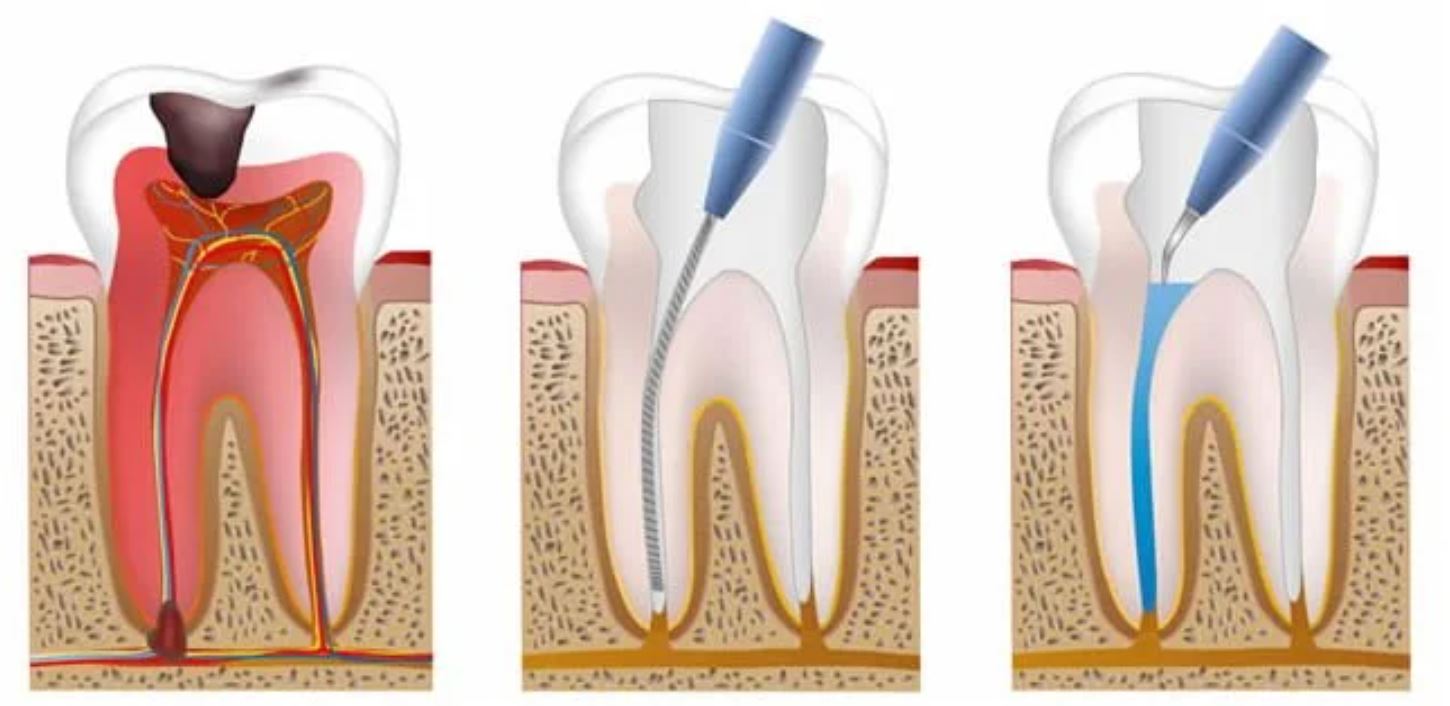
1. Infected or Inflamed Tooth
Damaged tissue inside the tooth can cause pain, sensitivity, or infection.
2. Cleaning the Root Canals
The affected tissue is removed, and the canals are carefully cleaned and shaped.
3. Filling and Sealing the Tooth
The cleaned canals are filled and sealed to help protect the natural tooth.
What this treatment involves.
Inside each tooth is a small chamber that contains the nerve and blood vessels. When deep decay, a crack, or trauma allows bacteria to reach that chamber, the tissue becomes inflamed or infected. The most common symptoms include throbbing tooth pain, prolonged sensitivity to hot or cold, pain when biting, a pimple on the gums, or a darkened tooth.
During treatment, we fully numb the tooth, create a small opening in the top surface, gently remove the inflamed tissue, and clean and shape the interior of the roots with fine instruments. The space is then disinfected and sealed with a biocompatible material to prevent re-infection.
Because a root-canal-treated tooth has been hollowed slightly to reach the infection, it needs a crown afterward to protect it from fracture and restore full chewing strength. Saving the natural tooth is almost always preferable to extraction — it maintains natural chewing, preserves bone, and avoids the need for an implant or bridge in most cases.
You may need or want this treatment if…
- You have persistent throbbing pain, especially at night or when lying down.
- Hot or cold sensitivity lingers long after the trigger is removed.
- A tooth hurts when you bite or chew.
- There is swelling, tenderness, or a pimple-like bump on the gum near the tooth.
Why patients choose this treatment.
- Relief from severe tooth pain and infection
- Preservation of your natural tooth
- Prevents the need for extraction and replacement
- Usually completed in one or two comfortable visits
- Excellent long-term prognosis when followed by a crown
Who this is a good fit for.
- Patients with deep decay reaching the nerve
- Cracked or fractured teeth causing significant sensitivity
- A tooth that darkened after prior trauma
- A previously restored tooth with new infection
A calm, considered process — from consultation to completion.
Diagnosis
Digital imaging and gentle testing confirm which tooth is involved and how deep the infection reaches.
Comfort First
The tooth and surrounding area are fully numbed before anything begins.
Treatment
Inflamed tissue is removed, the interior of the roots is cleaned and shaped, and the space is sealed.
Crown Placement
A custom crown protects the tooth long term and restores full chewing function.
Caring for your smile afterward.
Mild soreness for a few days is normal and typically responds well to over-the-counter pain relievers. Avoid chewing hard foods on the treated tooth until the final crown is placed, and let us know right away if pain returns or intensifies.
Is a root canal painful?+
The procedure relieves pain rather than causing it. Modern anesthesia keeps the tooth fully numb throughout treatment.
How long does it take?+
Most root canals are completed in one or two visits of about sixty to ninety minutes each.
Why do I need a crown afterward?+
A root-canal-treated tooth is more fragile without its inner tissue. A crown protects it from fracture and restores full strength.
Is extraction ever a better choice?+
Rarely. Saving your natural tooth preserves bone and chewing function. Extraction is usually reserved for teeth that cannot be structurally restored.
How long will the treated tooth last?+
With a well-placed crown and good hygiene, a root-canal-treated tooth can last a lifetime.
You may also be interested in.
General Dentistry
Dental Fillings
Mercury-free composite fillings that restore strength and blend invisibly.
Oral Surgery
Tooth Extractions
Comfortable, careful removal — with a clear plan for what comes next.
Restorative Dentistry
Dental Implants
A long-term solution for a single missing tooth, several teeth, or a full arch.
Ready when you are
Schedule your root canal treatment consultation.
Serving Plantation, Sunrise, Davie, and greater South Florida — with unhurried, honest dentistry.